
Good classroom management helps learners understand what to do, how to participate, and where to find support. When teaching abroad, start with a few clear routines and learn how your school handles concerns. This guide offers a practical plan for building consistency without creating unnecessary preparation.
Classroom management abroad starts before you choose a reward chart or rearrange the desks. Ask your coordinator which expectations already exist, how teachers record concerns, and who supports a class when a problem continues. A strategy that fits one school may conflict with another school’s procedures. Your goal is to make learning predictable while working within the setting you have joined.
Ask to observe a colleague teaching the same age group. Notice how students enter, collect materials, request help, and finish an activity. Discuss anything you do not understand rather than interpreting it through assumptions about the country. Schools within the same city can operate very differently. Keep questions specific: who contacts families, what happens after repeated disruption, and which responses require approval?
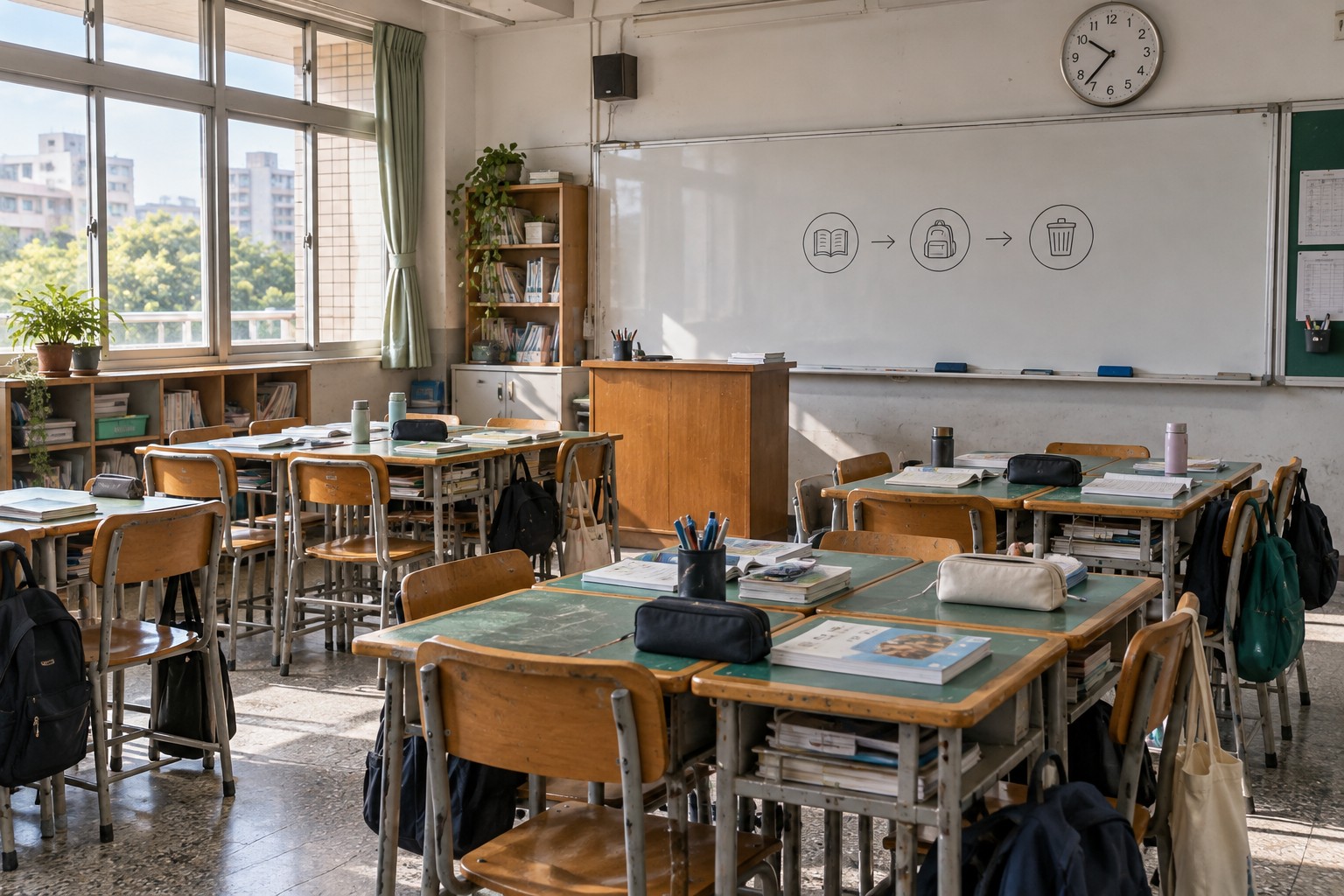
Begin with entry, attention, and transitions. For entry, put a short task where learners can see it and demonstrate what to do with bags and books. For attention, choose an agreed signal that does not depend on shouting. For transitions, explain how students should move, what they should carry, and what they should do when ready.
Practise each routine as you would teach a language task. Model it, ask a learner to demonstrate, then let everyone try. If it breaks down, pause and rehearse the missing step. Repeating a direction more loudly rarely clarifies a procedure students have never understood. Keep the routine short enough to use consistently during an ordinary busy lesson.
Plan instructions alongside the activity. Explain the task in short stages, show a finished example, and check the action students must take first. Instead of asking whether everyone understands, ask a learner to show where to write or demonstrate the first exchange. This checks the instruction without requiring a long explanation in English.
Give materials after the key instruction when distributing them would distract the class. Display a simple sequence for longer tasks so students can recover without interrupting you. For example: read the short dialogue, practise with a partner, change one detail, and perform it again. Adapt the number of steps to the learners’ age and language level.
Distinguish an unclear task from deliberate disruption. A learner who is staring at the page may need a model, vocabulary support, or a quieter way to ask for help. Start with a brief check before moving to the school’s behaviour procedure. Describe the action you need rather than assigning a label to the child.
For minor interruptions, use proximity, a quiet reminder, or a brief private conversation when appropriate. Avoid public arguments and consequences you cannot enforce. For repeated or serious concerns, follow the agreed reporting route and seek support. Safety concerns need immediate action under school procedures; they should never become an experiment in managing the situation alone.
Many difficulties emerge when an activity ends at different times for different learners. Prepare a meaningful extension that uses the same objective, such as explaining a choice, improving a sentence, or creating an additional example. Make it available before the first learner finishes. An extension should offer useful thinking rather than simply more copying.
During pair work, give both partners a role and a reason to listen. A speaker might describe a picture while a listener selects it, then they swap. Circulate with a narrow purpose: check whether students have started, whether each partner contributes, and whether the language support is adequate. Adjust one problem while the rest continue.
After a difficult lesson, write what happened immediately before the disruption, what you did, and what followed. Keep the record factual and use the school’s approved system for any identifiable information. Look for patterns across several lessons before deciding that a learner or group is always difficult.
Choose one change for the next lesson. You might shorten an explanation, move the materials, practise a transition, or add a visible example. Compare the result against a clear sign, such as fewer repeated instructions or more pairs beginning promptly. This produces a manageable improvement cycle instead of a growing collection of unrelated tricks.
Classroom support belongs in your job research. Ask about class size, age range, teaching assistants, available resources, induction, and the process for getting help. Find out whether you will have time to plan with colleagues and whether teachers receive a clear behaviour policy before starting.
Browse teaching jobs on Global School Scout and use the school directory to investigate the setting behind an advertisement. Bring practical questions to the interview: “Could you explain what happens when a classroom concern continues?” A concrete answer is more useful than a broad promise that all students are well behaved.
For your first week, choose the three routines you will teach, prepare one accessible opening task, and confirm whom to contact for support. Review them with your coordinator. Consistent, understandable procedures give you a stronger starting point than a complicated system you cannot maintain.
Further reading: British Council: Managing the lesson. Practical examples in this article are illustrative and should be adapted to your school’s policies.


Site help, FAQs, blogs, and how our Scouts work